How Many Square Feet Is the Average Master Bedroom?

Have you ever walked into a master bedroom and thought, “Wow, this feels amazing”? Or maybe you’ve stood in yours and wondered if it’s too small?
You’re not alone. Many American homeowners ask the same question: how many square feet is the average master bedroom? It’s one of the most common questions in home design — and for good reason.
The size of your master bedroom affects everything. It changes how your furniture fits. It shapes how relaxed you feel at night. It even impacts the resale value of your home.
I’m a home decoration and repair specialist. I’ve seen hundreds of bedrooms in New York and beyond. I’ve seen cramped 150-square-foot rooms transformed into cozy retreats. I’ve also seen oversized rooms that felt cold and uninviting. Size matters — but how you use that size matters even more.
In the USA, the standard master bedroom size has changed a lot over the decades. Homes built in the 1950s often had smaller bedrooms. Today’s new construction homes tend to offer much more generous square footage.
This post will walk you through everything you need to know. We’ll cover the average sizes, what affects them, how to measure your room, and how to make the most of any space. Whether you’re buying a new home, renovating, or just curious, this guide is for you.
This post is also part of the Complete Bedroom Guide — your go-to resource for everything bedroom-related.
Let’s dive in!
Key Takeaways:
- The average master bedroom in the USA is between 200 and 350 square feet.
- Older homes typically have smaller master bedrooms than newer builds.
- Room size affects furniture layout, storage, and overall comfort.
- Knowing how many square feet is the average master bedroom helps you plan smarter.
- You can make any size master bedroom feel larger with the right design choices.
How Many Square Feet Is the Average Master Bedroom?
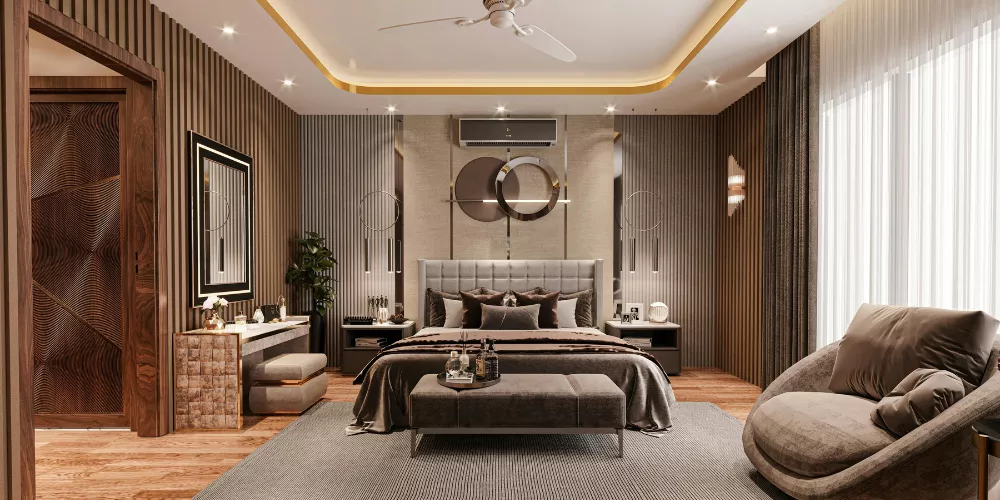
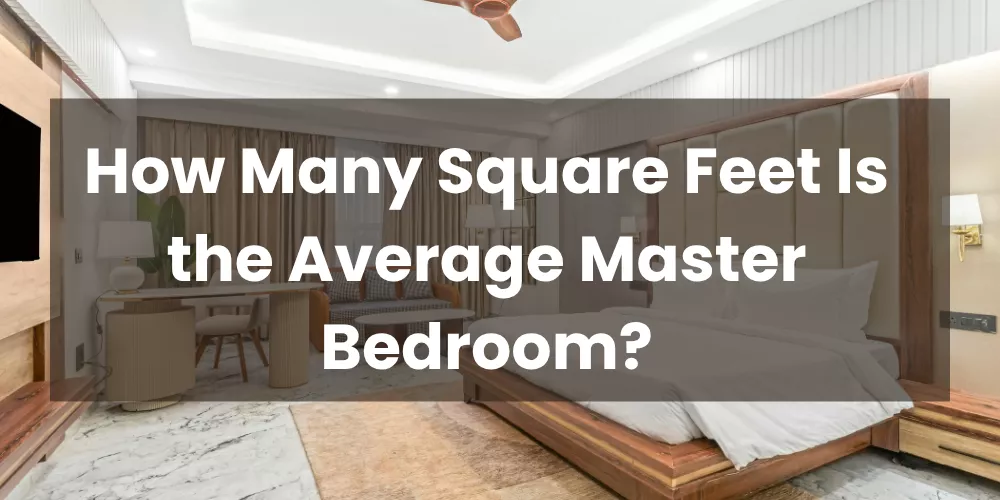
The average master bedroom in the United States is between 200 and 350 square feet. Most commonly, you’ll find master bedrooms around 224 square feet — roughly 14 by 16 feet. Builders and real estate experts think this size is comfortable. It’s also functional.
The National Association of Home Builders (NAHB) says new single-family homes in the U.S. are bigger now. They have grown in size. They have grown a lot over the years. With that growth, master bedrooms have gotten larger too. In newer homes, especially in the South and Midwest, master suites are often over 300 square feet. It’s common to see this size.
Knowing how many square feet is the average master bedroom gives you a helpful benchmark. It helps you compare your current room to national standards. It also helps when shopping for a new home or planning a renovation.
Here’s a quick overview of general size categories:
- Small master bedroom: Under 150 sq ft
- Average master bedroom: 200–350 sq ft
- Large master bedroom: 350–500 sq ft
- Master suite: 500+ sq ft (often includes a sitting area or walk-in closet)
These are general guidelines. Your home’s age, location, and builder all play a role in what you actually get.
How Master Bedroom Sizes Have Powerfully Changed Over the Years
Understanding history helps you understand what you have today. Master bedroom sizes in America have not always been what they are now.
In the 1950s and 1960s, homes were built smaller. A typical master bedroom back then was around 100 to 150 square feet. Families had different priorities. More rooms for kids, a bigger kitchen, or a large living room often took precedence.
By the 1980s and 1990s, things started shifting. Homebuilders responded to buyer demands for more personal space. Master bedrooms grew to around 175 to 225 square feet on average.
Today, many homes in Texas, Florida, and Georgia have master bedrooms. They usually measure between 250 and 400 square feet. Some luxury new homes have master suites. These often come with attached bathrooms, sitting areas, and walk-in closets. Together, they can easily reach 600 to 800 square feet.
Key factors that drove this change include:
- Rising homeowner income and expectations
- The trend toward open-concept and luxury living
- Greater emphasis on personal retreats and private spaces
- Influence of design shows and home renovation media
Practical tip: If your home was built before 1980, your master bedroom is likely on the smaller side. That’s completely normal — and very fixable with smart design choices.
Try modernizing your older master bedroom this weekend and see the difference!
Next, let’s look at what really makes a bedroom feel the right size.
What Truly Makes a Master Bedroom Size Feel Just Right?
Square footage is just a number. What really matters is how a room feels when you’re in it.
A good 200-square-foot master bedroom feels luxurious. It can feel nicer than a messy 350-square-foot room. I’ve seen this in homes all over Manhattan and Brooklyn. Space is tight, but creativity is abundant.
Several factors affect how comfortable a bedroom feels:
- Ceiling height: Higher ceilings make rooms feel more open and airy.
- Natural light: More windows create a sense of space.
- Furniture scale: Oversized furniture in a small room feels crowded.
- Color palette: Light, neutral colors visually expand a room.
- Layout flow: Clear pathways around the bed make movement feel easy.
Interior design standards say you need 24 to 36 inches of space around your bed on all sides. If your room fits this well, it’s working fine — no matter the square footage.
The National Kitchen and Bath Association (NKBA) has clearance rules. They are the same for related areas. These guidelines help ensure rooms feel livable, not just measurable.
Practical tip: Stand in the center of your master bedroom. Can you walk freely around the bed? Can you open dresser drawers without bumping into anything? If yes, your room is working well for you.
Take a fresh look at your master bedroom layout today — you might be surprised what a few changes can do!
Let’s now talk about how to accurately measure your room.
Simple Ways to Measure Your Master Bedroom Like a Pro
Before you redecorate or renovate, you need accurate measurements. Many homeowners skip this step — and regret it later when furniture doesn’t fit.
Here’s how to measure your master bedroom correctly:
What you’ll need:
- A tape measure (at least 25 feet long)
- A pencil and paper or a free app like MagicPlan or RoomSketcher
Step-by-step process:
- Measure the length and width of the room from wall to wall.
- Multiply the two numbers to get your square footage.
- Example: 14 feet × 16 feet = 224 square feet
- Note any alcoves, closets, or bump-outs that add or subtract space.
- Mark door and window locations on your sketch.
- Measure ceiling height for design planning.
Common mistakes to avoid:
- Measuring furniture instead of the room itself
- Forgetting to subtract closet space if it’s separate
- Not accounting for architectural features like columns or bay windows
Apps like Magicplan (available on iOS and Android) make this easier. You can scan a room with your phone camera and get a rough floor plan in minutes.
Pro tip from Archie M. Guerrero: Always measure twice, write it down once. Measuring errors can cost homeowners a lot. This often happens before they buy furniture.
Grab your tape measure right now and take five minutes to get your room’s exact square footage!
Once you know your measurements, it’s time to think about furniture layout.
How Room Size Affects Furniture Layout and Brilliant Design Choices
Once you know your square footage, you can plan your furniture layout with confidence. This is where knowing how many square feet is the average master bedroom really pays off.
Different room sizes call for different furniture strategies.
For rooms under 200 sq ft:
- Use a queen bed instead of a king
- Choose a bed frame with built-in storage drawers
- Opt for a wall-mounted headboard to save floor space
- Skip the bulky dresser — use a tall, narrow chest instead
For rooms 200–350 sq ft (average size):
- A king bed fits comfortably with room to spare
- Two nightstands work well on either side
- A dresser and small accent chair are possible
- A small bench at the foot of the bed adds style and function
For rooms over 350 sq ft:
- You can add a sitting area or reading nook
- A vanity or makeup table fits naturally
- Walk-in closet integration becomes possible
- More decorative elements like area rugs, floor lamps, and artwork shine
The American Furniture Manufacturers Association says to leave at least 30 inches. This space should be between the foot of the bed and the wall or dresser. This ensures natural traffic flow.
Real example: A couple in Queens, New York, had a 180-square-foot master bedroom. They switched from a king to a queen bed and took out a bulky armoire. This change gave them over 40 square feet of usable floor space — all without moving any walls.
Rearrange your furniture this weekend. A new layout can make a big difference!
Now let’s look at smart tricks that make even small rooms feel much bigger.
Smart Design Tips to Make a Small Master Bedroom Feel Incredibly Bigger
Not everyone has a 300-square-foot master bedroom. And that’s okay. The right design tricks can make a smaller room feel generous, warm, and stylish.
Here are the most effective tips I’ve used with clients across New York:
Use mirrors wisely: A big mirror on a wall reflects light and makes the room feel twice as deep. Mirrored closet doors are especially effective in tight spaces.
**Choose the right paint colors:** Light colors, like soft white or pale gray, can make walls seem farther away. Warm ivory works, too. Avoid dark, saturated colors in small rooms unless you’re going for a dramatic moody look.
Go vertical: Mount shelves high on walls to draw the eye upward. Floor-to-ceiling curtains do the same thing — they make ceilings feel taller.
Maximize under-bed storage: Use low-profile storage bins or a bed with built-in drawers. This removes the need for extra furniture that eats up floor space.
Use multi-functional furniture. An ottoman that also acts as storage is great. A nightstand with a built-in charging station helps keep the room tidy.
Keep it minimal: The fewer objects on surfaces, the larger a room feels. A clean, uncluttered space always reads as more spacious.
Houzz, a top home design platform in America, says decluttering helps homeowners a lot. It makes any room feel better, no matter how big or small.
Pick one tip from this list and try it in your bedroom today. You’ll feel the difference immediately!
Let’s now define what actually counts as a large master bedroom.
What Is Considered a Truly Large Master Bedroom?
A master bedroom is generally considered large when it measures 350 square feet or more. At this size, you have genuine room to design a personal retreat.
Rooms in this range allow for:
- A king-size bed with nightstands and full walking clearance
- A dedicated sitting area with chairs or a loveseat
- A full vanity or makeup station
- An entertainment setup or wall-mounted TV
- A decorative fireplace in upscale builds
- Large area rugs and statement furniture pieces
Luxury homes in California, Texas, and Florida have master suites. These suites are very popular. These suites combine the bedroom, walk-in closet, and spa-like bathroom. The total size usually exceeds 800 to 1,000 square feet.
These are often called “owner’s suites.” This new term focuses on privacy. It also highlights luxury, not just square footage.
What’s the difference between a master bedroom and a master suite?
| Feature | Master Bedroom | Master Suite |
| Size | 200–350 sq ft | 400–1,000+ sq ft |
| Bathroom | Shared or attached | Private, often spa-style |
| Closet | Standard | Walk-in or custom |
| Sitting area | Rarely | Often included |
Pro tip: When adding a large master bedroom, aim for at least 14 × 18 feet (252 sq ft) as your starting point. This gives you enough room for a king bed, functional layout, and design flexibility.
Dreaming of a larger master bedroom? Start by sketching your ideal layout — you might be closer to it than you think!
Let’s now look at how master bedroom size connects to your home’s value.
Master Bedroom Size vs. Home Value: What Every Smart Homeowner Should Know
This is where things get really interesting. Master bedroom size directly affects your home’s market value.
Real estate appraisers in the USA look at bedroom count and size as key factors when valuing a property. A small or awkward master bedroom can reduce a home’s appeal — and its sale price.
Here’s what the data tells us:
- Zillow says homes with bigger master bedrooms sell faster. They also sell for more money in competitive markets.
- A master bedroom under 150 square feet is often flagged as a drawback by buyers.
- A home addition can increase the size of a small master bedroom. This change often leads to a good return on investment (ROI).
A homeowner in Long Island, New York, expanded their master bedroom. This renovation boosted their ROI. They expanded it from 140 sq ft to 220 sq ft by removing a small, unused room. Their home’s appraised value rose by about $18,000 to $22,000. This increase more than covered the renovation costs.
Key things buyers look for in a master bedroom:
- At least 200 square feet of usable space
- An attached or nearby private bathroom
- Adequate closet space (walk-in preferred)
- Good natural light and ventilation
- Enough room for a king-size bed
If you’re planning to sell in the next few years, investing in your master bedroom is a smart move. It’s one of the rooms buyers care about most.
Thinking about boosting your home’s value? Start with the master bedroom — it’s one of the best investments you can make!
➡️ Now let’s look at popular master bedroom layouts and their typical square footage.
Common Master Bedroom Layouts and Their Ideal Square Footage
Not all master bedrooms are shaped the same. The layout of your room — not just the square footage — determines how well it functions.
Here are the most common master bedroom layouts in American homes:
1. The Rectangle (Most Common)
- Typical size: 12×16 ft to 14×18 ft (192–252 sq ft)
- Works well with a centered bed against the longest wall
- Easy to furnish and very versatile
2. The Square
- Typical size: 14×14 ft to 16×16 ft (196–256 sq ft)
- Gives more layout flexibility
- Great for diagonal bed placement or centered symmetry
3. The L-Shape
- Typical size: 250–350 sq ft
- Created by alcoves, bay windows, or closet bump-outs
- The alcove can serve as a reading nook or vanity area
4. The Open Suite Layout
- Typical size: 400–700 sq ft
- Combines sleeping area with a sitting zone
- Popular in luxury builds and master suite conversions
5. The Loft-Style Bedroom
- Typical size: 300–500 sq ft
- Found in converted urban spaces and high-end apartments
- Often features exposed beams, high ceilings, or industrial design
In New York City, where space is at a premium, the rectangular layout dominates. Many master bedrooms in Manhattan are less than 200 square feet. Still, talented designers make them look and feel amazing.
Pro tip: The layout matters as much as the size. A 200-square-foot rectangular room can be better than a 280-square-foot L-shaped room. This is true when the furniture is placed smartly. An awkward layout can hurt the L-shaped room.
Look at your bedroom’s layout with fresh eyes today. Is your furniture placement working with the room’s shape?
Quick Summary
The average master bedroom in the USA is 200 to 350 square feet. Most newer homes are about 250 square feet. Bedroom sizes have grown since the mid-20th century. Today, buyers want more space. They also expect better layouts and smarter designs. Whether your room is small or large, the right design choices make all the difference.
Key Points Covered:
- The average master bedroom is 200–350 square feet in the USA
- Bedroom sizes have increased significantly since the 1950s
- Proper clearance and layout matter as much as square footage
- Smart design tricks can make any bedroom feel larger
- Master bedroom size directly impacts your home’s resale value
Frequently Asked Questions
Many homeowners have questions about master bedroom sizes, layouts, and design. Here are the top questions I often get from clients, answered clearly. Are you buying a home, renovating, or just curious? These answers will help you make better choices about your space.
What is the standard size of a master bedroom in the USA?
The standard size of a master bedroom in the USA is typically between 200 and 350 square feet. Most commonly, builders aim for around 14 × 16 feet, or about 224 square feet. Newer homes are often larger. Older homes, built before 1980, usually have master bedrooms about 150 square feet. Knowing the average size of a master bedroom is useful. It helps homeowners compare their space to national standards.
How many square feet is the average master bedroom in a new home?
In a new home, the average master bedroom is about 250 to 300 square feet. The National Association of Home Builders says new single-family homes are bigger now. They are larger than they used to be. This change started in the 1970s. As homes get bigger, master bedrooms have also grown. This gives buyers more personal space than past generations had.
What is the minimum square footage for a master bedroom?
Most building codes in the USA require a bedroom to be at least 70 square feet with a minimum width of 7 feet. Most interior designers say a master bedroom should be at least 150 square feet. This size makes it functional. This size fits a queen bed and allows space around it. Anything under 150 square feet feels cramped. This size limits your furniture choices a lot.
Can a 200-square-foot master bedroom fit a king-size bed?
Yes, a 200-square-foot master bedroom can fit a king-size bed, but it will be snug. A standard king bed measures 76 × 80 inches. In a 14 × 14-foot room (196 sq ft), you can fit a king bed with minimal clearance on the sides. For comfortable movement, consider a queen bed instead. You should have 24 to 30 inches of clearance on all sides. This is the minimum recommended by most interior design standards.
How do I make my master bedroom feel larger without renovating?
You can make your master bedroom feel bigger with some simple design tricks. No major renovations are needed. Paint the walls a light, neutral color. Use large mirrors to reflect light and add depth. Install floor-to-ceiling curtains to make the ceiling appear higher. Remove unnecessary furniture and reduce clutter. Use under-bed storage to maximize space. These simple changes can boost your room’s feel. It doesn’t matter how big the average master bedroom is in your area.
Conclusion
So, how many square feet is the average master bedroom? The answer lies between 200 and 350 square feet. Most American homes average around 224 square feet. Newer constructions can go up to 300 square feet.
Here’s what I’ve learned from years of work in homes across New York and the USA: the number is just a starting point. What truly matters is how you design, arrange, and use that space.
A 200-square-foot room can feel cozier with the right paint, furniture, and layout. In contrast, a 400-square-foot room can feel cold if it’s neglected or messy.
Here are your 3 practical takeaways to walk away with:
- Know your numbers. Measure your room today and compare it to the national average. You’ll feel more confident planning any future changes.
- Design to your layout. Work with your room’s shape and size rather than against it. The right furniture scale makes all the difference.
- Invest wisely. Consider upgrading your master bedroom if you’re planning to sell. It’s one of the best ways to boost your return on investment.
Homeowners in Long Island can change their bedrooms a lot. They need just a fresh coat of paint, new light fixtures, and better furniture placement. No walls moved. No major renovation. Just smart, intentional design.
Your master bedroom should be your personal retreat. It’s where you begin and end each day feeling great. Whether yours is 180 square feet or 380 square feet, it deserves to look and feel its very best.
Found this guide helpful? Share it with a friend who’s planning a bedroom makeover. Comment below with your bedroom’s square footage! I want to see how your space stacks up against the national average!