
Complete Guide to a Better Bedroom in 2026

Your bedroom & setup affects how well you sleep, how safe you feel, and how good your room looks. Most people don’t think much about their bedroom until something feels off. Small changes can make a big difference. For example, the right light bulb, a well-placed mirror, or a smoke detector in the right spot can help a lot. This guide covers everything you need to know to set up your bedroom the right way.
What is Bedroom & Setup?
Bedroom & setup means everything that goes into making your bedroom work well for you. It’s not just about furniture. It includes air quality, lighting, room size, safety, and decor.
Think of it like building a puzzle. Your air purifier, light bulbs, and smoke detector connect. They make your room comfy, safe, and personal.
A good bedroom setup helps you sleep well. It also gives you cleaner air. You feel relaxed right when you walk in.
Why Bedroom & Setup is Important
Getting your bedroom setup right gives you real benefits every single day.
Better sleep — The right lighting and air quality help your body relax and fall asleep faster.
Safer home — A smoke detector in the right spot can save your life. It’s that simple.
More comfort—Knowing your room size helps you pick the right furniture. This keeps your space from feeling crowded.
Better mood — A well-decorated room with a full-length mirror and good lighting just feels good to be in.
Cleaner air — Running your air purifier the right way keeps dust and allergens out. It also helps reduce odors in your sleep space.
Your bedroom is where you spend about a third of your life. Setting it up right is one of the best things you can do for your health and happiness.
Complete Guide to a Better Bedroom in 2026
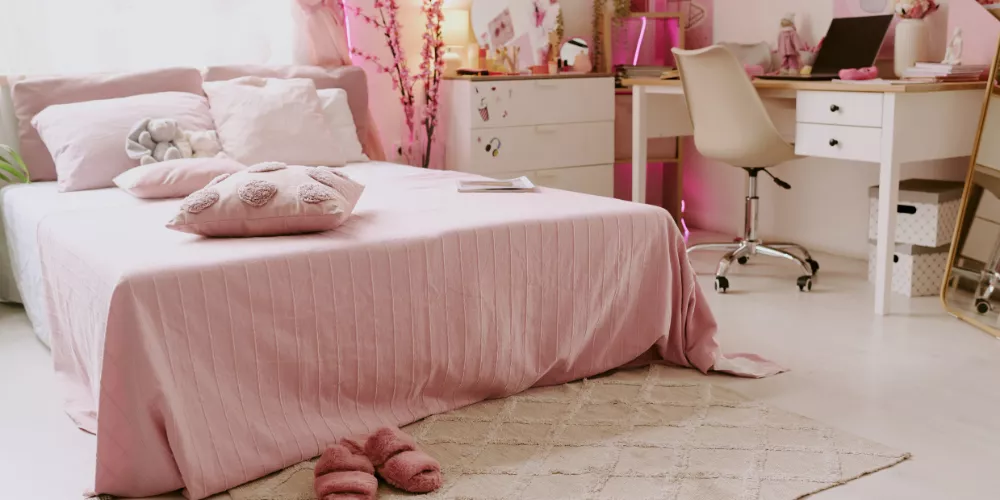
Your bedroom should be your favorite room in the house. But for most people, it’s just where they sleep. In 2026, setting up a great bedroom & setup doesn’t have to cost a fortune or take weeks. Small, smart changes make a huge difference — from the air you breathe to the light above your head. This guide covers everything. Air quality, lighting, room size, safety, and decor — all in one place. Read this once and you’ll know exactly what your bedroom needs.
How Long To Run Air Purifier In Bedroom?
Running your air purifier the right amount of time makes a real difference in your air quality. Most experts recommend running your air purifier for at least 8 to 12 hours a day in your bedroom. If someone in your home has allergies or asthma, running it all day is even better.
The best time to run it is while you sleep. That’s when your body is most exposed to the air in the room. A quiet, low-setting purifier running overnight is a great habit.
Here’s a simple rule: if your purifier has an auto mode, just leave it on. It adjusts on its own based on air quality. If not, turn it on about 30 minutes before bedtime so the air is already clean when you lie down.
Don’t worry about energy costs. Most bedroom air purifiers use less electricity than a small lamp. Running it regularly is far better than running it only once in a while.
What Watt Light Bulb For Bedroom?
Choosing the right watt light bulb for your bedroom is easier than you think. For most bedrooms, a 40 to 60-watt equivalent LED bulb works perfectly. That’s bright enough to see clearly but soft enough to feel relaxing.
If you use LED bulbs — which most people do now — look for bulbs labeled “soft white” or “warm white.” These have a color temperature of around 2700K to 3000K. That warm yellow glow helps your brain wind down at night.
Avoid cool white or daylight bulbs in the bedroom. They work well in kitchens and offices. However, they can keep you awake longer by telling your brain it’s still day.
For a bedside lamp, a 40-watt equivalent LED is usually plenty. For overhead lighting, go with 60 watts. If your bedroom is large, you may want two light sources instead of one bright bulb.
How Many Square Feet Is The Average Master Bedroom?
The average master bedroom in the United States is between 200 and 250 square feet. That’s roughly 14 feet by 14 feet or 12 feet by 18 feet. Of course, homes vary a lot depending on when they were built and where you live.
Older homes from the 1950s and 60s often have smaller master bedrooms. They can be as small as 150 square feet. Newer homes usually have bigger master suites. These can be 300 square feet or even larger.
Why does this matter? Knowing your square footage helps you plan your furniture layout. A king-size bed needs at least a 12-by-12-foot room to feel comfortable. A queen-size bed works well in a 10-by-10-foot space.
Before buying new furniture, measure your room. Length times width gives you the square footage. This simple step saves you from buying a bed or dresser that’s too big for the space.
Where To Install Smoke Detector In Bedroom With Ceiling Fan?
Installing a smoke detector in a bedroom with a ceiling fan takes a little extra thought. The fan can push air around and slow down how fast smoke reaches the detector. So placement really matters here.
Never install a smoke detector directly above a ceiling fan. The airflow from the blades can keep smoke from reaching the sensor in time.
Instead, place your smoke detector at least 3 feet away from the ceiling fan blades. If your room allows it, mount it on a wall between 4 and 12 inches from the ceiling. Wall mounting near the door is a smart choice in fan bedrooms.
The NFPA says to put a smoke detector in every bedroom. So even if you have one in the hallway, you still need one in the room itself.
Test your smoke detector once a month by pressing the test button. Change the battery every year, or get a 10-year sealed battery model so you don’t have to think about it.
Where To Put A Full Length Mirror In Bedroom?
A full-length mirror does two things in a bedroom — it’s practical and it makes the room look bigger. But where you put it really matters.
The most popular spots are: behind the bedroom door, on a closet door, leaning against a wall, or mounted on the back of a wardrobe.
Behind the door is a great option if you have a small bedroom. It keeps the mirror out of the way but easy to access when you’re getting dressed.
If you want to make your room feel larger and brighter, place the mirror across from a window. It reflects natural light and opens up the space visually.
Avoid placing a mirror directly facing your bed. Some people find it uncomfortable or distracting at night. If that’s the only spot that works, a mirror with a cover or curtain is a simple fix.
Lean mirrors look stylish and casual. Wall-mounted mirrors save floor space. Both work well — it just depends on your room and your style.
Step-By-Step Bedroom & Setup Guide
Setting up your bedroom the right way doesn’t have to be overwhelming. You can do it one step at a time. Start with the basics — safety and air quality — then move on to lighting and décor. Each step builds on the last, and before you know it, your bedroom will feel like a whole new space. Here’s how to get started.
Step 1 — Measure your room. Know your square footage before buying anything. Measure length times width.
Step 2 — Install your smoke detector. Mount it at least 3 feet from any ceiling fan, either on the ceiling or high on a wall.
Step 3 — Set up your air purifier. Place it near your bed, away from walls and corners, so it can pull in air from all directions.
Step 4 — Choose the right light bulbs. Go with 40–60 watt equivalent soft white LED bulbs. Use a dimmer if possible.
Step 5 — Place your full-length mirror. Pick a spot that works for your daily routine — behind the door, on a closet, or across from a window.
Step 6 — Set your air purifier schedule. Turn it on 30 minutes before bed or use auto mode. Aim for 8–12 hours daily.
Step 7 — Review and adjust. Walk around your room. Does it feel open? Is the lighting comfortable? Make small tweaks until it feels right.
Bedroom & Setup Common Problems & Solutions
Even with the best intentions, bedroom setups don’t always go perfectly. Maybe the smoke detector keeps going off, or the room feels too dark even with new bulbs. These are common problems, and they all have simple fixes. You don’t need to be an expert to solve them. Let’s look at the most frequent issues and exactly what to do about them.
Problem: Smoke detector keeps beeping. Solution: Low battery is the most common cause. Replace the battery right away. If it still beeps, the unit may be past its 10-year lifespan and needs replacing.
Problem: Air purifier isn’t helping with smell or dust. Solution: Check the filter. A clogged filter can’t clean air properly. Most filters need replacing every 6 to 12 months. Also make sure the purifier is the right size for your room.
Problem: Bedroom lighting feels too harsh. Solution: Switch to a warmer bulb (2700K). Add a lamp with a shade to soften the light. Dimmer switches are also an easy upgrade.
Problem: Room feels cramped even after organizing. Solution: You may have too much furniture for the square footage. Use a full-length mirror to reflect light and create the feeling of more space. Store items under the bed to free up floor space.
Problem: Mirror keeps tipping or falling. Solution: If you have a leaning mirror, use furniture anchors. You can also use anti-tip straps to secure it to the wall. These are inexpensive and easy to install.
Tips & Best Practices Of Bedroom & Setup
A great bedroom setup goes beyond fixing issues. It’s about making smart choices right from the beginning. Small habits and simple decisions add up over time. Here are some tips to maximize your space, whether you’re creating a new room or updating an old one. Follow these and your bedroom will feel cleaner, safer, and more comfortable every day.
Run your air purifier consistently. Short bursts don’t work as well as steady daily use. Make it a habit like brushing your teeth.
Use layered lighting. Don’t rely on just one overhead light. Combine a ceiling light with bedside lamps for a flexible, cozy setup.
Test your smoke detector monthly. Set a reminder on your phone. It takes five seconds and could save your life.
Keep your mirror clean. A dusty or streaky mirror makes your whole room feel less put-together. Wipe it down once a week with a glass cleaner.
Don’t overcrowd your bedroom. Every piece of furniture should serve a purpose. Less clutter means better sleep and easier cleaning.
Replace air purifier filters on schedule. Mark the date on a calendar or set a phone reminder. A dirty filter is worse than no filter.
Choose warm light for nighttime. Even your phone screen matters. Use night mode on devices and soft bulbs in lamps to help your body prepare for sleep.
Frequently Asked Questions
Getting your bedroom setup right brings up a lot of questions. That’s totally normal. No matter if you’re a first-time renter or have lived in your home for years, there’s always something new to discover. You can improve your room to fit your needs better. Here are the most common questions people ask — with simple, straight answers.
How often should I replace my bedroom air purifier filter?
Most filters last 6 to 12 months. Check your manual for the exact schedule. Replace it sooner if you notice a smell or reduced airflow.
Can I use a regular bulb in my bedroom instead of LED?
Yes, but LED bulbs last much longer, use less energy, and come in warm tones that are better for sleep. They’re worth the switch.
Do I really need a smoke detector inside my bedroom?
Yes. The NFPA recommends one inside every bedroom. A hallway detector alone may not wake you up in time if a fire starts in another part of the home.
What’s the best position for a full-length mirror if my bedroom is small?
Behind the door or on a closet door. These spots keep the mirror accessible without taking up any floor space.
How do I know if my master bedroom is a good size?
The U.S. average is 200–250 square feet. If your room is smaller, focus on smart furniture placement and mirrors to open it up visually.
Conclusion
Setting up your bedroom the right way doesn’t have to be complicated. Start with safety — get your smoke detector in the right spot. Then focus on air quality, the right light bulbs, and a layout that fits your space. Place a full-length mirror in a good spot, and you’ll change how your room looks and feels.
Every small decision adds up. A safe, bright, and cozy bedroom helps you relax and recharge. You deserve that. Take it one step at a time, and your ideal bedroom setup is closer than you think.