Complete Guide to Home Electrical Systems 2026

If you own a home in the USA, your electrical system is very important. It’s also often overlooked. Most people think about electricity when a light flickers. They also notice it when a breaker trips. Sometimes, they pay attention when their power bill is high. Knowing your home’s electrical system saves money. It keeps your family safe, too. It helps avoid dangers.
That’s why Archie M. Guerrero made this guide. He is a skilled home decoration and repair expert. He has years of hands-on experience. Archie creates beautiful and useful living spaces. He makes reliable repairs. He uses smart design choices. He pays close attention to detail. His goal is simple: to share practical knowledge. This helps you understand your home’s electrical system. You will learn to maintain and improve it with confidence.
Are you a first-time homeowner in Texas? Maybe you’re upgrading a 1970s colonial in Ohio. Or, are you trying to fix a tripping bathroom outlet? This guide is for you! We’ll explain how home electrical systems work. You’ll learn about the wiring in your walls. We’ll also show you how to spot problems early. Finally, we’ll tell you when to call a licensed electrician.
Let’s start from the beginning.
What Is a Home Electrical System?
A home electrical system has wires and outlets. It has switches, circuit breakers, and panels, too. It brings electricity from your utility. This powers your lights and appliances.
Think of it like the veins and arteries of your home. Power comes in from the street through a service entrance. This is often a weatherproof box on your house’s side. Then, it goes into your main electrical panel, which is also known as the breaker box or fuse box. From there, it’s divided into individual circuits that run throughout your home.
Each circuit is designed to carry a specific amount of electrical load. Your kitchen may have a 20-amp circuit just for the refrigerator. It might also have another one for the microwave. Your bedroom outlets might share a 15-amp circuit. When too much power is drawn on one circuit, the breaker trips to prevent overheating and fire.
Here’s a simple breakdown of the key parts of a home electrical system:
- Service entrance: Where electricity from the utility grid enters your home
- Main electrical panel: Distributes power to all circuits; houses the breakers
- Circuit breakers: Safety switches that cut power when circuits are overloaded
- Wiring: The copper or aluminum conductors inside your walls
- Outlets and switches: Where you access power or control lighting
- Grounding system: It prevents electric shocks. Stray currents go safely into the ground.
For most American homes, electrical service comes in at 120/240 volts. Standard outlets run on 120V. Large appliances need 240V circuits. This includes dryers, water heaters, and central AC units.
Knowing this basic structure helps you find problems. It also helps you talk to electricians and make good upgrade choices. We will cover this in detail in the guide.
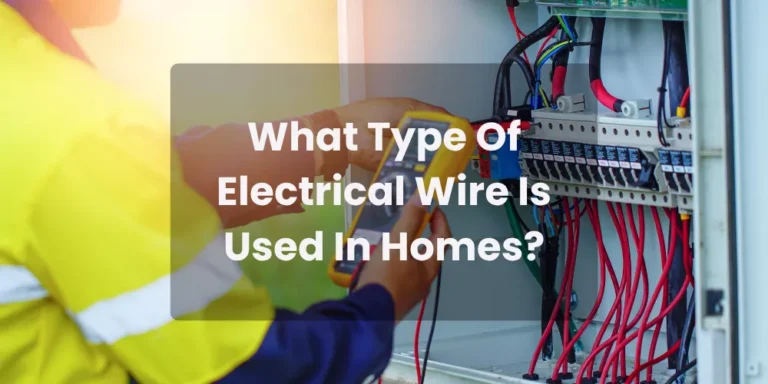
What Type of Electrical Wire Is Used in Homes?
Homeowners often wonder: what kind of electrical wire is in my walls? This is very important. Wrong wiring can cause fires. It can also fail home inspections. Plus, it can raise your home insurance costs.
In many American homes built after the 1970s, you’ll see NM-B cable. It’s often called Romex. This is the standard for residential wiring across the United States.
Types of Residential Electrical Wire
NM-B Cable (Romex) This is the most widely used wiring in American homes today. It has two or three insulated wires and a bare copper ground wire. All of these are wrapped in a plastic sheath. It’s used for general-purpose circuits — outlets, switches, and lights. Different colors of sheathing indicate different wire gauges and amp ratings:
- White sheath: 14-gauge wire, rated for 15-amp circuits
- Yellow sheath: 12-gauge wire, rated for 20-amp circuits
- Orange sheath: 10-gauge wire. It’s rated for 30-amp circuits. This wire is for dryers and water heaters.
- Black sheath: 8 or 6-gauge wire, used for large 240V appliances
Homes made between 1965 and 1973 may have aluminum wiring. This is instead of copper. This was common during a copper shortage but has since been linked to increased fire risk. Aluminum expands and contracts more than copper, causing loose connections over time. If your home has aluminum wiring, it’s worth having a licensed electrician inspect it. Special outlets and switches rated for aluminum (labeled CO/ALR) must be used.
Knob-and-Tube Wiring If your home is older than 1950, it may have knob-and-tube wiring.
Check for this type of wiring if your home is older.
This old system uses separate wires that run through ceramic knobs and tubes.
It has no ground wire, which means it doesn’t meet modern safety standards. Many insurance companies won’t insure homes with active knob-and-tube wiring. Replacing it is a priority.
THHN/THWN Wire This is a single insulated wire. It is usually used inside conduit, which can be metal or plastic tubing.
You’ll see this wiring in garages and basements. It’s also used outdoors. This wiring protects against moisture and damage.
Low-Voltage Wiring This includes:
- Coaxial cables (for cable TV)
- Cat-5 or Cat-6 Ethernet cables
- Telephone wires
- Speaker wire
These run on low voltage and are safe to handle. However, they must be properly routed to prevent signal interference and damage.
Know your home’s electrical wire. It helps with renovations. It also makes inspections easier.
Types and Main Parts of a Home Electrical System
Your home’s electrical system isn’t just a bunch of wires in the wall. It’s a well-organized system. Each part helps keep your home safe, powered, and functional. Here’s a detailed breakdown.
The Main Electrical Panel
This is the heart of your home’s electrical system. The main panel, called the breaker box or load center, is usually found in a basement. It can also be in a utility closet, garage, or hallway. It contains:
- The main breaker is a big double-pole breaker. It usually comes in 100-amp, 150-amp, or 200-amp sizes. This breaker controls all the power in your home. Flipping this shuts off everything.
- Individual circuit breakers are small. They range from 15 to 50 amps. Each one controls a separate circuit in your home. Each one is labeled (or should be) for the area it serves — “Master Bedroom,” “Kitchen Outlets,” “Washer,” and so on.
Most homes today need a 200-amp panel. This is important for modern electrical loads. This is especially true if you have central air. It’s also true for electric appliances, an EV charger, or a home office. Older homes with 60-amp or 100-amp panels may need an upgrade.
Circuit Breakers vs. Fuses
Older homes used fuses instead of breakers. A fuse is a one-time-use device — when a circuit overloads, the fuse “blows” and must be replaced. Breakers, on the other hand, simply trip and can be reset. If your home still has a fuse box, upgrading to a modern breaker panel is strongly recommended.
GFCI Outlets
GFCI outlets have small buttons. They say “Test” and “Reset.” You find these outlets in bathrooms, kitchens, garages, and outside. They find tiny imbalances in electrical current. This can happen when electricity flows through a person. If they detect this, they cut off power in just milliseconds.
The National Electrical Code (NEC) requires GFCI outlets in any area near water. If your GFCI outlet is not working, it could be tripped, faulty, or wired incorrectly. Always test them monthly.
AFCI Breakers
AFCI breakers stop arc faults. Arc faults are dangerous. They happen with damaged wiring, worn cords, or loose connections. These arcs don’t necessarily trip a regular breaker but can cause house fires. Most US building codes require AFCI breakers. This is true for bedrooms and living areas in new buildings.
Grounding and Bonding
The grounding system connects your electrical system to the earth. It gives stray electrical current a safe path. Every modern home should have a proper ground. Without it, a fault in an appliance could make the metal casing live, leading to a deadly shock hazard. Bonding links all metal parts. This includes pipes, ducts, and panels. It keeps them at the same electrical potential. This way, the risk of shock is lower.
Outlets, Switches, and Fixtures
These are the access points of your electrical system. Standard outlets in the US are 15-amp, 125V. Kitchens and bathrooms typically use 20-amp outlets. Three-prong outlets include a ground pin. Older two-prong outlets lack a ground, which is a safety issue. You can fix this by installing GFCI outlets or adding a proper ground.
The Complete Guide to Home Electrical Systems
Now that you know the parts, let’s talk about how everything works together — and how to keep it working well.
How Electricity Flows Through Your Home
Power enters your home through the service entrance at the top of your electrical panel. The main breaker then splits that power into individual circuits. Each circuit forms a loop. Power flows out through the “hot” wire (black). It powers your outlets and lights, then returns through the “neutral” wire (white). The bare copper wire is the ground, which provides a safe fault path.
When you plug in a lamp and flip the switch, you’re completing that circuit. When too many devices use power on one circuit at the same time, the breaker trips. This breaks the loop and stops overheating.
Electrical Load and Capacity
Every device in your home draws a certain amount of power, measured in watts. Amps x Volts = Watts. A standard 15-amp, 120V circuit can handle 1,800 watts. However, to avoid tripping and heat buildup, keep usage at 80% capacity, which is 1,440 watts.
Common household loads:
- Refrigerator: ~150–200 watts
- Microwave: ~1,000–1,500 watts
- Hair dryer: ~1,800 watts
- Window AC unit: ~500–1,500 watts
- Electric space heater: ~1,500 watts
- EV charger (Level 2): ~7,200 watts (requires dedicated 240V circuit)
If you add an electric vehicle charger, a hot tub, or a big appliance, you’ll likely need a dedicated circuit. You might also need to upgrade your panel.
Understanding Your Circuit Breaker Panel
Every homeowner should know where their breaker panel is and how to read it. Take 10 minutes to open the panel door and check:
- Is every breaker labeled clearly?
- Are any breakers in the “off” or middle position (tripped)?
- Do you see any signs of burning, melting, or discoloration?
- Is the panel brand recalled? Federal Pacific Stab-Lok, Zinsco, and Pushmatic have safety issues.
If you see anything alarming, don’t ignore it. A professional electrical home inspection catches issues like this. It’s exactly what they’re for.
Dedicated Circuits: What Needs One
Some appliances require their own dedicated circuit — meaning nothing else shares that breaker. This includes:
- Refrigerator
- Dishwasher
- Microwave
- Washing machine
- Electric dryer (240V)
- Electric range/oven (240V)
- HVAC system
- Water heater
- EV charger
- Hot tub or pool equipment
A high-draw appliance on a shared circuit can trip breakers. It can also cause overheating. This is common in American homes.
Outdoor and Underground Wiring
Wiring that runs outdoors or underground must be rated for moisture and UV exposure. UF-B (Underground Feeder) cable works well for direct-burial jobs. You can use it to power a garage. It’s also good for outdoor lights. It has a solid plastic jacket rather than a paper-wrapped sheath like NM-B.
Outdoor circuits need two things. They need weatherproof outlet covers. These are also called in-use covers. They also need GFCI protection.
Why You Need an Electrical Home Inspection
Many homeowners skip an electrical home inspection. Later, they often regret it.
A standard home inspection checks the basics of your electrical system. A licensed electrician goes much deeper. They look for issues that a regular inspection might miss. They’ll check your panel. They’ll look at the wiring, grounding, and outlet safety. They will also check code compliance. A general inspector can’t do this.
When Should You Get One?
- Before buying a home: Especially homes built before 1980. You don’t want to inherit knob-and-tube wiring or an undersized panel.
- After major renovations: DIY work or permit-less contractor work can create hidden hazards.
- If your home is over 25 years old: Wiring degrades. Connections loosen. Panels age.
- After a lightning strike or flood: Water and surge damage can silently damage wiring.
- If you want to add circuits or big appliances, check what your system can handle first.
What Does an Electrical Inspection Cover?
A thorough electrical home inspection includes:
- Panel inspection: Breaker condition, panel capacity, proper labeling, signs of overheating
- Wiring inspection: Type of wiring, visible deterioration, improper splices or connections
- Outlet testing: Polarity, grounding, GFCI function
- Smoke and CO detector check: Placement, function, and battery status
- Code compliance review: Identifying any work that doesn’t meet current NEC standards
- Grounding and bonding verification
- Exterior wiring and service entrance inspection
What Does an Electrical Inspection Cost?
In the U.S., a professional electrical inspection costs between $100 and $300. This is for a standard single-family home. Larger homes or those requiring more detailed analysis can run $400–$600.
That’s a small price to pay. It’s nothing compared to finding a $10,000 rewiring job after closing on a house. Or worse, facing a house fire from faulty wiring.
Home Electrical Cost Guide
Before you budget for electrical work, it helps to know what things typically cost across the USA. Prices differ by region, contractor, and scope of work. Here are some realistic ballpark figures for 2024–2025.
Common Electrical Project Costs
Panel Upgrade
- 100-amp to 200-amp upgrade: $1,300–$3,000
- Full panel replacement (same size): $800–$2,000
- Adding a subpanel: $500–$1,500
New Circuit Installation
- Standard 15 or 20-amp circuit: $150–$300
- 240V dedicated circuit (for dryer, EV charger, etc.): $300–$800
Outlet Work
- Replace a single outlet: $50–$150
- Install a new GFCI outlet: $100–$200
- Add a new outlet where none exists: $150–$300
Rewiring
- Partial rewiring (one room): $1,000–$3,000
- Whole-house rewiring: $8,000–$20,000+ (depending on home size and accessibility)
Lighting and Fixtures
- Install a ceiling light/fan: $100–$300 (labor)
- Install recessed lighting (per light): $125–$300
- Outdoor lighting installation: $150–$400 per fixture
Surge Protection
- Whole-home surge protector installation: $150–$400
Electric Vehicle Charger
- Level 2 EV charger installation: $400–$1,500 (including dedicated circuit)
Does an Electric Fireplace Add Value to Your Home?
This is a question Archie hears a lot. In short — yes, with conditions. An electric fireplace can boost your home’s value. It does this when installed correctly, looks good, and is placed in a busy living area. Buyers love the ambiance without the maintenance of a wood or gas fireplace.
A built-in electric fireplace can boost your home’s value by $1,000 to $5,000. The exact amount depends on the market and the unit’s quality. The electrical work itself — typically a dedicated 15 or 20-amp circuit — costs $150–$300 to add. That’s a strong return.
Factors That Affect Electrical Project Costs
- Age of your home: Older homes often require more prep work, opening walls, and code upgrades
- Labor rates in your area: Electrician rates differ a lot. They range from $50 per hour in rural Midwest markets to over $150 per hour in coastal cities.
- Permit Requirements: Most electrical work needs a permit. This costs $50 to $300, depending on your area.
- Material costs: Copper wire prices change a lot. This affects project costs. Many people don’t realize how much.
Common Electrical Problems and Solutions
Now let’s get practical. Here are the main electrical problems for American homeowners. Here’s what you can do about them.
1. Frequently Tripping Breakers
The problem: A breaker trips regularly, cutting power to part of your home.
Common causes:
- Circuit overload (too many devices on one circuit)
- A short circuit (wires touching that shouldn’t be)
- A ground fault (electricity taking an unintended path to ground)
- A failing breaker
What to do: First, unplug devices and reset the breaker. If it trips again with nothing plugged in, you probably have a short circuit or a bad breaker. Call an electrician. If it trips only under load, you may be overloading the circuit and need a dedicated circuit added.
2. Dead Outlets
The problem: An outlet has no power.
What to check first:
- Look for a tripped GFCI outlet nearby. One GFCI outlet can control multiple outlets on the same circuit. Hit the “Reset” button.
- Check your breaker panel for a tripped breaker.
- Check if the outlet is switch-controlled (many living room outlets are wired to a wall switch).
If none of those fix it, the outlet may have a loose wire connection or may simply be burnt out.
3. Flickering Lights
The problem: Lights flicker or dim, especially when appliances cycle on.
Common causes:
- Loose bulb or connection
- Voltage can change when a high-draw appliance starts. This often happens with air conditioners. It also occurs with fridge compressors.
- Loose neutral wire at the panel or outlet
- Failing light fixture
When it’s serious: If lights flicker in multiple rooms, it could mean trouble. Also, if you hear buzzing or see scorch marks, pay attention. This might indicate a loose main neutral wire. This is a serious safety issue. Call a professional right away.
4. Burning Smell or Discoloration Around Outlets
The problem: An outlet feels warm, smells like burning plastic, or has scorch marks around it.
What to do: Stop using that outlet immediately. Burning smells near outlets usually mean arcing. Arcing is when dangerous sparks happen inside the wall or outlet box. This is a fire risk. Don’t try to diagnose this yourself. Call an electrician.
5. Two-Prong Outlets in an Older Home
The problem: Your home has old two-prong outlets. These won’t fit three-prong plugs.
Solutions:
- Replace with a GFCI outlet (no ground wire required; must be labeled “No Equipment Ground”)
- Run a proper ground wire (requires opening walls)
- Install a whole-circuit GFCI breaker to protect ungrounded outlets
6. High Electric Bills With No Clear Cause
The problem: Your electric bill keeps climbing even though your usage hasn’t changed.
Check for:
- Phantom loads — devices drawing power when “off” (TVs, game consoles, chargers)
- An aging HVAC system running less efficiently
- A failing refrigerator compressor cycling too often
- Electric water heater with a failing heating element
- Possible meter or billing error — worth calling your utility company
Check if your house heater uses gas or electricity. If you rely on electric heat, now is a good time to compare costs in your area.
DIY Electrical Tips for Homeowners
Archie M. Guerrero is the first to say: most electrical work should be done by a licensed professional. But there are some safe, legal tasks that a careful homeowner can handle. Here’s what you can — and can’t — do yourself.
What You CAN Do Yourself (Safely)
Replacing a Light Switch or Outlet This is the most approachable DIY electrical task. You’re not adding new wiring — just swapping one device for another.
- Turn off the breaker.
- Check that the power is off with a non-contact voltage tester (don’t skip this step).
- Take a photo of the current wiring before you disconnect anything.
- Install the new device by matching the wire colors.
Resetting a Tripped GFCI Outlet No tools required. Just press the “Reset” button. If it won’t stay reset, there’s a fault on the circuit that needs professional diagnosis.
Installing a Smart Thermostat Smart thermostats, like Nest and Ecobee, are easy to set up. You can install them quickly.
They come with clear instructions.
You can install them easily.
Turn off power to your HVAC at the breaker, swap wires to the matching terminals on the new unit, and restore power. Check if your system has a C-wire (common wire). Most smart thermostats need one for constant power.
Replacing a Light Fixture Swapping a light fixture for one with equal or lower wattage is a simple DIY task. Just make sure the power is off and connect the wires correctly.
Ensure the new fixture’s weight is properly supported. Heavy fixtures should be anchored to a structural box or a brace bar.
Installing a Ceiling Fan Where a Ceiling Light Exists
You can do this if the current box can support a fan.
Never hang a ceiling fan from a standard light fixture box. It can’t handle the sideways movement of a spinning fan and may fall.
Adding a Plug-In EV Charger (Level 1) A standard Level 1 charger simply plugs into a regular 120V outlet. No installation needed. Just be sure the outlet is on a dedicated or lightly loaded circuit if you’re charging overnight.
What You Should NEVER DIY
- Any work in the main panel includes:
- Adding breakers
- Upgrading capacity
- Replacing the main breaker
- Running new wiring through walls
- Installing a subpanel or outdoor disconnect
- Any work involving 240V circuits
- Wiring a hot tub, EV Level 2 charger, or electric vehicle panel
- Replacing a service entrance
- Most electrical work requires a permit. This means a licensed electrician must handle it in most US areas.
If you’re unsure, it’s best to consult a licensed electrician first. Most will give a free or low-cost estimate.
Is It Safe to Charge an Electric Scooter at Home?
Electric scooters are more popular in American neighborhoods now. This question always comes up. The short answer? Yes — but with precautions.
Electric scooters charge using a regular 120V outlet. They usually draw 2 to 4 amps and take several hours to fully charge. That’s a very modest electrical load — far less than a hair dryer. For most homes, this is completely fine.
Charging an electric scooter at home can be risky. If you’re not careful with the battery, it may pose fire hazards. Most scooter fires are due to lithium-ion battery failures. They do not come from the home’s electrical system.
Safe Charging Practices
- Use the original charger that came with your scooter. Third-party chargers can overcharge or overheat the battery.
- Never charge overnight unattended in a bedroom or closed space.
- Charge in a ventilated area — a garage or utility room is ideal.
- Don’t charge immediately after heavy use — let the battery cool down for 30 minutes first.
- Inspect the battery regularly for swelling, cracks, or unusual heat.
- Don’t keep a fully charged scooter plugged in for days. Overcharging can harm the battery and increase heat risk.
- Install a smoke detector in any room where you regularly charge electric devices.
It’s not safe to charge devices like scooters, e-bikes, laptops, phones, and tablets on one circuit. It can cause problems. Use different circuits for each device. It creates risks for safety. It can overload the circuit and lead to overheating or even fires. Always use separate circuits for safer charging. It can lead to problems. It can cause problems. Always use separate circuits for safety. It can lead to problems. Always charge them separately for safety. It can cause problems. It can lead to problems. It can cause problems. It can lead to problems. It can cause problems. It’s better to use separate circuits for safety. It can cause problems. It can cause problems. It can cause problems. It can cause problems. Be cautious. Don’t go over 80% of the circuit’s rated capacity.
Does Your House Heater Use Gas or Electricity?
If you’re not sure whether your heating system runs on gas or electricity, you’re not alone. Archie gets this question all the time. It’s common from new homeowners and renters starting out.
The type of house heater, gas or electric, impacts your energy costs. It also affects maintenance needs and what happens during power outages.
How to Tell the Difference
Gas furnaces:
- Have a flue pipe or exhaust vent leading outside
- Have a gas line running to the unit
- Often have a blue pilot light flame visible
- Your gas bill goes up in winter
Electric furnaces and heat pumps:
- No exhaust vent required
- No gas line connected
- Usually have a larger electrical disconnect or 240V outlet nearby
- Your electric bill goes up in winter
Dual-fuel systems:
- Use a heat pump (electric) for mild temperatures and gas as backup when it gets very cold
- Common in the Mid-Atlantic and Southeast US
Which Costs More?
In most US markets, natural gas is cheaper per BTU than electricity for heating. Heat pumps are electric and very efficient. In many climates, especially mild ones, they can be cheaper than gas furnaces.
The Department of Energy says you can save money. Switch from electric resistance heat to a heat pump. You could save 25% to 50%.
If you’re heating with electric baseboard heaters, you’re likely paying a premium. That’s worth evaluating when your system is due for replacement.
How to Cool Your House Without Electricity
Sometimes the grid goes down. Sometimes you just want to cut your cooling costs dramatically. Learning to cool your house without electricity is a handy skill. It helps all American homeowners.
Natural Ventilation Strategies
Cross-ventilation: Open windows on opposite sides of your home. This lets air flow naturally. Place a battery-powered fan near a lower window. This pulls in cooler air from the north or shaded side. Open windows on the upper floors to let hot air escape.
The hot-cool cycle: Keep your home closed during the day when it’s hottest. Then, open everything up at night when it cools down. In many areas of the US, like the Southwest and Midwest, temperatures change a lot. Day and night can feel very different. This makes it very effective.
Thermal Mass
Concrete floors, brick walls, and tile soak up heat all day. Then, they release it slowly at night. Close curtains and shades during peak sun hours if your home has these features. This helps prevent heat gain.
Window Treatments
Blackout curtains on south and west-facing windows can reduce solar heat gain by 33%. Exterior shutters and awnings work even better. They can cut heat gain by up to 65%, says the US Department of Energy.
Whole-House Fans
A whole-house fan mounted in the attic pulls cool air in through open windows and pushes hot attic air out. It uses far less electricity than central air. It typically consumes 200–700 watts, while central AC uses 3,000–5,000 watts.
Evaporative Cooling (Swamp Coolers)
In dry areas like Arizona and Nevada, evaporative coolers work well. They are also effective in New Mexico and parts of Colorado and California. They use 75% less energy than central AC. They don’t work well in humid climates.
Portable and Low-Power Options
- Battery-powered fans for outages
- Cooling towels for immediate personal relief
- Ice and fan trick: Place a bowl of ice in front of a fan for a DIY air conditioner effect
- Hang damp sheets over doorways. The evaporation cools the air as it flows through.
When Should You Call a Professional Electrician?
Archie M. Guerrero is very clear on this point: when in doubt, call a pro. Electricity doesn’t give second chances. Here are the clear signals that it’s time to pick up the phone.
Call an Electrician Immediately If:
- You smell burning near outlets, the panel, or anywhere in the walls
- Lights are flickering throughout the entire house
- An outlet, switch, or panel feels hot to the touch
- You see scorch marks, blackened outlet covers, or melted plastic
- A breaker trips immediately after being reset with nothing plugged in
- Your home has aluminum wiring, knob-and-tube wiring, or a Federal Pacific / Zinsco panel
- You’ve had a flood, fire, or lightning strike
- Sparks come from an outlet when you plug something in
Call an Electrician for These Projects:
- Adding a new circuit for any reason
- Installing a 240V appliance (dryer, range, EV charger, hot tub)
- Upgrading or replacing your electrical panel
- Rewiring any portion of your home
- Installing a whole-house generator or transfer switch
- Any outdoor electrical work beyond a simple light fixture swap
- Installing hardwired smoke or CO detectors (though many homeowners do this themselves legally)
How to Find a Good Electrician in the USA
- Look for a licensed and insured electrician in your state
- Check reviews on Google, Angi (formerly Angie’s List), or Yelp
- Ask for references from neighbors or your local real estate agent
- Always get at least two quotes for major work
- Verify they pull permits — electricians who skip permits are a red flag
- Ask if they’re a member of NECA (National Electrical Contractors Association)
A good electrician will clearly explain the work. They will give you a written estimate and pull the needed permits. Don’t let anyone talk you out of permits — they protect you as the homeowner.
Frequently Asked Questions (FAQ)
Home electrical systems can feel confusing, especially when problems show up without warning. Many homeowners have similar questions about safety, costs, and basic troubleshooting. This FAQ section provides clear answers to common questions. This way, you can make smart choices to keep your home safe and efficient.
How do I know if my home’s electrical panel is big enough?
If your home has a 60-amp or 100-amp panel, it may not meet today’s needs. This can be a problem if you have central AC, electric appliances, or want to add an EV charger. A 200-amp panel is the standard recommendation for most homes today. Have an electrician assess your current usage and headroom.
How often should I test my GFCI outlets?
The National Electrical Manufacturers Association recommends testing GFCI outlets once a month. Simply press the “Test” button — power to the outlet should cut off. Then press “Reset” to restore it. If the outlet doesn’t respond correctly, replace it.
Can I install my own outlets and switches in the USA?
In most US states, homeowners are legally allowed to do their own electrical work on their own home. But most jurisdictions still require a permit and inspection, and the work must meet NEC code. If you’re not sure, hire a licensed electrician. Mistakes can cause fires. They can also lead to electrocution.
What does it mean when my breaker keeps tripping?
A breaker that keeps tripping means something is off. It could be too many devices on one circuit (overload), a short circuit, a ground fault, or a failing breaker. Don’t just reset it and ignore it. Diagnose the cause or have an electrician look at it.
How long does home electrical wiring last?
Copper wiring in good condition can last 50–70+ years. The insulation around wires wears out quickly. This is especially true in hot attics or damp crawl spaces. Connections loosen over time. It’s smart to have older wiring inspected every 10–15 years.
Is an electric fireplace cheaper to run than a gas fireplace?
Generally, yes — an electric fireplace costs $0.15–$0.30 per hour to operate on average in the USA. A gas fireplace typically costs $0.30–$0.60 per hour depending on local gas rates. But gas fireplaces produce more heat. An electric fireplace can boost your home’s value in two ways: looks and easy setup.
What’s the safest way to prepare for a power outage?
- Install a whole-house surge protector.
- Plan to cool your home without power during summer outages.
- Keep a battery-powered radio and flashlights handy.
- Think about a standby generator for longer outages.
A transfer switch is installed by a licensed electrician. It lets you safely connect a generator to your home’s circuits.
Does my homeowner’s insurance cover electrical damage?
Most standard homeowner’s insurance covers electrical damage. This includes issues like short circuits and power surges.This includes sudden events. For example, lightning strikes and unexpected failures.
They usually don’t cover damage from:
- Deferred maintenance
- Wear and tear
- Code violations
This is another reason an annual electrical inspection is valuable.
Final Thoughts
Your home’s electrical system is very powerful, but it can also be dangerous. The great news is that you don’t need an engineering degree to stay safe and solve problems. It requires awareness, a bit of basic knowledge, and knowing when to call in the pros.
Here’s what Archie M. Guerrero wants you to take away from this guide:
Know your system. Find your breaker panel. Know where your shutoff is. Check your wiring type if your home is older than 30 years.
Respect electricity. It’s not something to experiment with. The risks aren’t just financial — they’re life-safety risks. When in doubt, don’t.
Invest in inspections. Get a professional electrical home inspection every 5 to 10 years, or whenever you buy a home. It’s one of the smartest moves you can make.
Use energy wisely. Is your heater gas or electric? Can you charge your electric scooter safely? Do you know how to cool your home during a power outage? These things matter. Being informed saves money and keeps your family safe.
Make smart upgrades. Choosing the right electrical wire for your renovation is key. Consider if an electric fireplace adds value before selling. Every smart choice protects your investment. It also makes your living space better.
Electricity is your home working for you — as long as you understand it, maintain it, and treat it with respect.